
The average millionaire has seven different income streams, according to research from IRS data analysis. Meanwhile, most people rely on a single paycheck — and wonder why building wealth feels impossible. If you want to create multiple streams of income that actually move the needle, you need to think differently about money.
I learned this lesson the hard way in 2019 when my consulting business took a 60% revenue hit overnight. One client — who represented most of my income — decided to “restructure” their budget. That sleepless week taught me more about financial security than any business school ever could.
Here’s what I discovered: diversification isn’t just an investment strategy. It’s a survival strategy. And the wealthy understand this intuitively. They don’t put all their eggs in one basket, whether that basket is a job, a business, or even a “safe” investment.

Why Multiple Income Streams Matter More Than Ever
The traditional “work until 65” model is broken. According to the Bureau of Labor Statistics, the median employee tenure is just 4.1 years. Job security is a myth, and inflation is eating away at purchasing power faster than most salaries can keep up.
But here’s the thing: multiple income streams aren’t about working more hours. They’re about working smarter. The goal is to build systems that generate money while you sleep, travel, or focus on what you love most.
I’ve personally tested dozens of income stream ideas over the past eight years. Some crashed and burned spectacularly. Others became consistent five-figure contributors to my annual income. The difference? Understanding which strategies actually scale and which ones are just disguised second jobs.
💡 Key Takeaway
The wealthiest people don’t just have multiple income streams — they have complementary income streams that work together synergistically. Your blog can promote your course, which can lead to coaching clients, which can generate affiliate commissions.
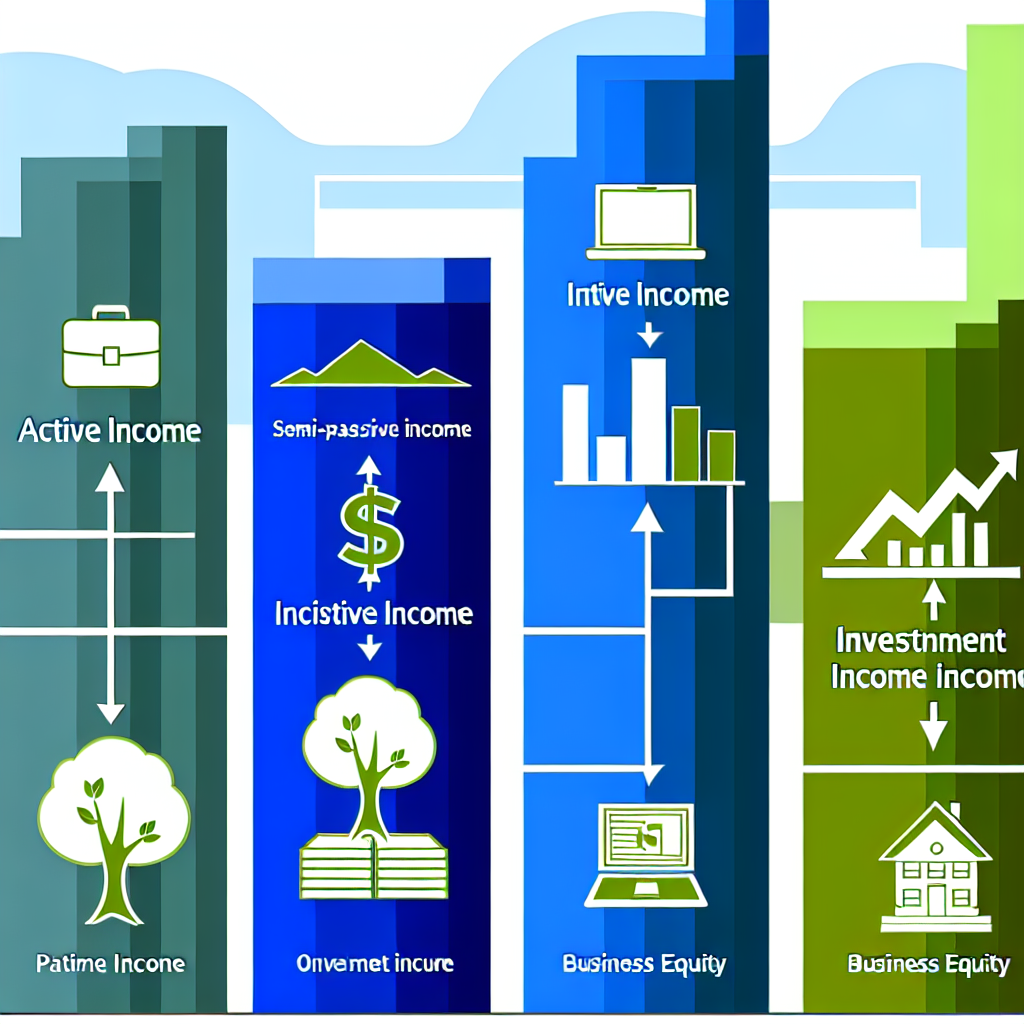
The Four Pillars of Income Stream Success
Before diving into specific strategies, you need to understand the framework that separates winners from wannabes. After analyzing hundreds of successful multiple income stream portfolios, I’ve identified four essential pillars:
Pillar 1: Active Income (Your Foundation)
This is your day job, freelance work, or active business income. It requires your direct time and attention, but it’s crucial because it funds everything else. Don’t quit your day job until your other streams are generating at least 6-12 months of expenses.
The key is optimizing this income source for maximum efficiency. I once helped a marketing manager negotiate a 40% raise by documenting her revenue impact. That extra $24,000 per year became the seed money for her real estate investments.
Pillar 2: Semi-Passive Income (The Bridge)
These streams require upfront work but generate ongoing income with minimal maintenance. Think affiliate marketing programs, online courses, or rental properties.
My first semi-passive win was a digital course I created in 2020. It took 80 hours to build but has generated over $150,000 in revenue since launch. The maintenance? Maybe 2-3 hours per month updating content and answering student questions.
Pillar 3: Passive Investment Income
Dividend stocks, REITs, bonds, and index funds fall into this category. According to Federal Reserve data, the top 10% of earners derive 32% of their income from investments.
The magic happens when you reinvest this income to compound your returns. A $100,000 investment portfolio generating 4% annually becomes $1.48 million over 30 years with compound growth.
Pillar 4: Business Equity
This is ownership in businesses — whether you start them or invest in them. It’s the ultimate wealth builder because successful businesses can generate exponential returns.
You don’t need millions to start here. I know someone who bought a 10% stake in a local car wash for $15,000. Five years later, that investment is worth $75,000 and pays quarterly distributions.
Digital Income Streams That Scale
The internet has democratized wealth creation like never before. Here are the digital income streams I’ve seen generate consistent results for ordinary people:
Content Creation and Monetization
YouTube creators with 100,000+ subscribers average $60,000 annually according to Influencer Marketing Hub. But you don’t need massive audiences to make money.
Sarah, a nurse from Ohio, started a TikTok account sharing medical study tips. With just 25,000 followers, she makes $3,200 monthly through sponsored posts, affiliate commissions, and her own study guide sales. The key is serving a specific, valuable niche.
- YouTube ad revenue + channel memberships
- Sponsored content and brand partnerships
- Affiliate marketing within your content
- Selling your own digital products
- Patreon or subscription-based support
E-commerce Without Inventory
Dropshipping and print-on-demand let you sell products without buying inventory upfront. The margins are lower, but the cash flow requirements are minimal.
My friend Marcus built a $15,000/month print-on-demand business selling joke t-shirts to dog owners. His total startup cost? $200 for design software and initial advertising. The business runs almost entirely on autopilot now.

✅ Pro Tip
Start with one income stream and scale it to $1,000/month before adding another. I see too many people spread themselves thin across ten different “opportunities” and never get any of them to meaningful profitability.
Digital Products and Online Courses
Information products have incredible margins — often 90%+ profit once you account for platform fees. The course creation industry is projected to reach $350 billion by 2025 according to Global Industry Analysts.
But here’s what most people get wrong: they try to teach everything to everyone. The most successful course creators solve one specific problem for one specific audience. My $2,000 course on email marketing for coaches vastly outperforms my $500 general marketing course.
Real Estate: The Wealth Builder’s Secret Weapon
Real estate has created more millionaires than any other asset class. According to research by the National Association of Realtors, real estate represents 28% of total U.S. wealth.
The beautiful thing about real estate is the multiple income streams within the asset class itself:
Rental Property Income
Traditional rental properties can generate 6-12% annual returns when purchased correctly. I bought my first rental property in 2021 — a duplex that cash flows $800 monthly after all expenses.
The magic happens when you combine rental income with appreciation and tax benefits. That $800 monthly income is effectively tax-free due to depreciation deductions.
Short-Term Rentals (Airbnb)
Well-located Airbnb properties can generate 2-3x traditional rental income. A friend in Nashville bought a $180,000 condo that brings in $4,500 monthly through Airbnb — nearly triple what long-term rent would yield.
The downside? More management intensive and subject to local regulations. But the income potential makes it worth considering.
Real Estate Investment Trusts (REITs)
Don’t have $50,000 for a rental property down payment? REITs let you invest in real estate with as little as $100. Many REITs pay 3-7% annual dividends and trade like stocks.
I allocate 15% of my investment portfolio to REITs through Vanguard’s Real Estate ETF (VNQ). It’s not as exciting as owning physical property, but it’s completely passive and liquid.
Real estate is the closest thing to a guaranteed wealth builder, but only if you buy right and hold long enough for compound appreciation to work its magic.
My real estate mentor who owns 47 rental units
Investment Income Streams
Building wealth through investments requires patience, but the compounding effects are extraordinary. Here’s how to create multiple streams of investment income:
Dividend Growth Investing
Dividend-paying stocks provide quarterly income that typically grows over time. Johnson & Johnson has increased its dividend for 59 consecutive years. Coca-Cola? 60 years.
My dividend portfolio generates about $8,400 annually in passive income. It’s not life-changing yet, but it’s growing 8-12% per year as companies raise their payouts and I reinvest the dividends.
Bond Laddering
With interest rates higher than they’ve been in 15 years, bonds are attractive again. Treasury bonds, corporate bonds, and municipal bonds can provide steady income with lower volatility than stocks.
I ladder Treasury bonds to mature every year, providing annual cash flow while protecting against interest rate risk. Current 5-year Treasury yields are around 4.3% — not bad for risk-free income.
Index Fund Distribution Income
Even growth-focused index funds pay distributions. The S&P 500’s dividend yield is typically 1.5-2.0%, while international and emerging market funds often yield 2-4%.
The key is building a large enough portfolio where these “small” yields become meaningful. A $500,000 portfolio yielding 2.5% generates $12,500 in annual passive income.
⚠️ Watch Out
Beware of “high-yield” investments promising 15%+ returns. If it sounds too good to be true, it probably is. Stick to proven asset classes and accept market-rate returns for sustainable wealth building.
Service-Based Side Hustles That Scale
Service businesses can quickly generate cash flow, which you can then invest in more passive income streams. The trick is choosing services that can eventually run without your direct involvement.
Consulting and Coaching
If you have expertise in any area, someone will pay for your knowledge. The global coaching market is worth $20 billion annually according to the International Coaching Federation.
I started consulting part-time while keeping my day job. Within 18 months, I was earning $8,000 monthly in consulting income. The key was specializing in one narrow area (email marketing automation) rather than being a generalist.
Digital Marketing Services
Small businesses desperately need help with digital marketing, but most can’t afford big agencies. This creates a massive opportunity for skilled freelancers.
Services with recurring revenue potential include:
- Social media management ($1,500-$3,000/month per client)
- Email marketing setup and management ($500-$2,000/month)
- SEO and content creation ($2,000-$5,000/month)
- Sales funnel creation and optimization
Online Tutoring and Teaching
Platforms like Outschool, Preply, and Cambly make it easy to monetize teaching skills. ESL tutors on Preply earn $10-$30 per hour, while specialized subject tutors can charge $50-$100+ hourly.
The beauty is scheduling flexibility. You can tutor evenings and weekends around your main job, then scale up as demand grows.
The Tax Advantages of Multiple Income Streams
Here’s something most people miss: different income streams are taxed differently. Understanding this can save you thousands annually.
Ordinary income (wages, consulting fees, short-term capital gains) is taxed at rates up to 37%. But qualified dividends and long-term capital gains max out at 20% for high earners. Municipal bond interest is often completely tax-free.
Real estate provides massive tax advantages through depreciation deductions. My rental properties show “losses” on paper due to depreciation, even though they generate positive cash flow.
Business income offers the most tax optimization opportunities. You can deduct home office expenses, business equipment, travel costs, and more. Just make sure you’re following IRS guidelines — tax mistakes can be costly.
✅ Pro Tip
Track expenses meticulously from day one of any business venture. Use tools like QuickBooks or FreshBooks to categorize every expense. Come tax time, you’ll thank yourself for the organization.
Your 90-Day Action Plan
Knowledge without action is worthless. Here’s your step-by-step plan to create multiple streams of income starting today:
Days 1-30: Foundation Building
- Audit your current finances: Calculate your monthly expenses and existing income
- Choose your first additional stream: Pick ONE that matches your skills and available time
- Set up business systems: Separate bank account, expense tracking, basic LLC if needed
- Start small: Aim for $500 in additional monthly income first
Days 31-60: Implementation and Testing
- Launch your first income stream: Whether it’s freelancing, affiliate marketing, or a digital product
- Track everything: Revenue, expenses, time invested, conversion rates
- Optimize based on results: Double down on what works, eliminate what doesn’t
- Reinvest profits: Put earnings into growing the stream or starting investments
Days 61-90: Scaling and Diversifying
- Scale your successful stream: Increase rates, expand services, or automate processes
- Consider stream #2: Only if stream #1 is generating consistent income
- Start investing: Put excess cash flow into index funds, REITs, or other assets
- Plan for taxes: Set aside 25-30% of business income for tax obligations
The best time to plant a tree was 20 years ago. The second best time is now.
Chinese Proverb (applicable to income streams)
Common Pitfalls to Avoid
After watching hundreds of people attempt to create multiple streams of income, I’ve seen the same mistakes repeatedly:
Shiny Object Syndrome: Starting ten different things and mastering none. Focus beats diversification in the early stages.
Underestimating Time Investment: “Passive” income usually requires significant upfront work. Plan accordingly.
Ignoring Market Demand: Building products nobody wants is a fast track to failure. Validate demand before investing heavily.
Neglecting Legal/Tax Implications: Different income types have different tax treatments and legal requirements. Consult professionals when needed.
Lifestyle Inflation: Spending all additional income instead of reinvesting it into wealth-building assets.
⚠️ Watch Out
Beware of “gurus” selling get-rich-quick schemes. Real wealth building takes time, effort, and smart strategies. If someone promises you’ll make $10,000 monthly in 30 days with no experience, run.
Your Financial Future Starts Today
Creating multiple streams of income isn’t just about making more money — it’s about taking control of your financial destiny. When you’re not dependent on a single source of income, you have options. You can take risks, pursue opportunities, and build wealth on your own terms.
The strategies I’ve shared aren’t theoretical. They’re battle-tested methods that real people use to generate real income. Some will work better for your situation than others. The key is starting with one, mastering it, then expanding strategically.
Remember: every wealthy person started exactly where you are right now. They just decided to do something different with their time and money. Your future self will thank you for the actions you take today.
Want to dive deeper into building multiple income streams? Start with one method that resonates with your current skills and situation. Focus on execution over perfection. And most importantly, start today.
The path to financial freedom isn’t always easy, but it’s always worth it. Your multiple income streams journey begins with a single step. What will yours be?